Friday, May 8, 2020

The Guest List

A huge thank you to Netgalley for the Advanced Reader's Copy! Release date June 2, 2020

Amazon.com: The Guest List: A Novel (9780062868930): Foley, Lucy ...


Guests gather on a remote Irish island to celebrate the wedding of Jules and Will, a day that is sure to be extravagant and unforgettable. Told from multiple points of view, what begins as a fun and relaxing get together for family and old friends, turns into a nightmare no one could have predicted. Foley weaves an extremely suspenseful and compulsive story that you just can't put down. Fans of Agatha Christie, Ruth Ware and Louise Penny will enjoy this novel immensely. Highly recommend!

Sunday, May 3, 2020

Marketing

Marketing is one of my favorite things about being a librarian! During quarantine being savvy with marketing has become a necessity for getting our patrons in the virtual door. Social media has been a life saver for marketing our digital resources to patrons. I've been posting daily recommendations on Instagram and Facebook, using screen shots of books we currently have available on Hoopla and OverDrive. This is the first time I've been active with Instagram and Facebook stories and I probably won't go back because it's so fun!

Once the library opens back up, our department will most likely need to refresh our display shelves, which has been a huge attention grabber for us in the past. Our librarian in charge of the displays updates our "Fresh Off the New Shelf," weekly with books that have migrated off our "New Shelf" downstairs. The same shifting happens in the circulation department with fiction titles. Most of the time our librarians will choose a theme shelf as well, usually related to a holiday, a special month, such as African American history or Women's History, and seasons. There's always an eye catching sign and title to go along with it.

Another of my favorite ways to market is a printed bookmark or newsletter with book recommendations. Patrons who don't read reviews or look on social media aren't always aware of what is available to them. Promoting books on physical material that a patron can grab on their way out of the library can have a great effect on circulation and patron satisfaction!

Sunday, April 26, 2020

Separation Anxiety

I think separating books into subgenres permanently can be a slippery slope. Very rarely do books fit into one category and doing so can make searching difficult for patrons. I especially don't agree with separating books based on community complaints, as mentioned in the Iowa Library article. For me, that inches way too close to censorship. I believe positively highlighting books that belong in certain subgenres on end caps or book displays is a more efficient way to manage the collection. It's all about the intention behind the separation that is important.

Using end caps or book displays brings attention to certain books without having to assign a subgenre to each one. Patrons looking for a specific book or browsing will still be able to find titles that interest them. Librarians can also navigate away from bowing to community pressure and separating books that contain questioned content from their rightful place with the other books in their genre.

The one reason I could see separating a subgenre is if the books themselves are in high demand and the library wants to highlight them permanently and make them more easily accessible to interested patrons. In my library in Elkhart, we have the Urban Fiction at the very front of the Fiction section because it's in such high demand, our librarians wanted to make sure our patrons could go right to it and browse. I see this as a positive reason for separation.

Wednesday, April 22, 2020

Library Journal

Hey all! Check out my first review for Library Journal!

https://www.libraryjournal.com/?reviewDetail=the-silence


Right after we discussed book reviews in this class, I applied to be a reviewer for Library Journal. I got my first assignment right before social distancing and working from home started. I was so thankful to have something like this to occupy my time. It has been a really fun experience!

A huge thank you is owed to Erin for mentoring me during this process!

Sunday, April 19, 2020

Graphic Novels

Last year about this time I visited my friend, Chelsie who lives in northeast Michigan. We live about 4+ hours apart, so I only make it up there 2-3 times a year if the weather holds up. We made our usual trip to Barnes & Noble and spent a few hours browsing and reading. I'd gotten married only a month before this trip, so this was the first time our husbands, also avid readers, joined us! Instead of starting at the front and slowly making our way back, Chelsie hurried off in search of the graphic novels. When I asked what was going on, she responded by telling me she comes by every so often to buy graphic novel versions of the classics: Shakespeare, Jane Austen, Charles Dickens, etc. She then told me about her students who can't make it through word heavy classics but devoured the story when it was put in graphic novel form. I was amazed at her genius, as I frequently am.

I think Chelsie's students are proof that graphic novels have an important place in our library collections, for teens and adults. Ultimately, we read books for the story. Our purpose is to get the story to the patron. Why should the mode it's delivered make the story any less important? Graphic novels are written to make stories more approachable. The concepts, the plots, the character interactions will all still be there. Teenage boys WANTING to read Jane Austen. That's a win for graphic novels in my book!

Thursday, April 16, 2020

The Hate U Give

Image result for the hate u give book cover

The Hate U Give by Angie Thomas

Summary:

When Starr Carter wakes up every morning, she has to remember which Starr she's supposed to be. When she's home with her family, or helping out her dad at his shop, she's Garden Heights Starr; the one who lives in a poor neighborhood that is riddled with drugs and gang violence. But when she goes to school, she's Williamson Prep Starr; one of only a few black students, cool and collected, who plays basketball and dates a white boy named Chris. Starr never lets her worlds seep into each other, until a tragic incident forces them to collide. Her childhood friend, Khalil is shot by a police officer while driving Starr home from a party. Suddenly Khalil is national news and everyone wants to know the identity of "the witness." It throws Starr into a new world, one where her bravery and her loyalty are continuously questioned and tested. One thing is for sure: Starr can't keep her worlds separate anymore. 

Young Adult Characteristics:

Addresses Real World Problems: The Hate U Give does this especially well, highlighting the physical and emotional struggles Starr has to face within her community and her school.

Fast Pace: The beginning especially was fast paced but the rest of the book slowed and quickened based on what was happening in the story. It definitely kept the reader's attention throughout.

Reader/Character Relation: While not every teen who reads this story can relate directly to Starr, she deals with more common issues, such as girl dynamics in high school, having a boyfriend, getting good grades, etc. Living in a neighborhood like Garden Heights also makes Starr a much more relatable character for teens in her specific situation as well. The danger of living in a community that is as at war within itself, learning to be aware of your surroundings, listening to your parents about safety, etc.

Read-a-likes:

I'm Not Dying with You Tonight by Gilly Segal
All American Boys by Jason Reynolds
On the Come Up by Angie Thomas
The Education of Margo Sanchez by Lilliam Rivera


Sunday, April 12, 2020

Mr. Rogers' Neighborhood: A Visual History

Mister Rogers' Neighborhood: A Visual History: Fred Rogers ...


Readers' Advisory Matrix

1. Where is the book on the narrative continuum?

A mix (combines highly narrative moments with periods of fact-based prose)

2. What is the subject of the book?

The book focused on the personal and professional life of Fred Rogers and how his television show effected it's viewers.

3. What type of book is it?

Biography

4. Articulate appeal

What is the pacing of the book?

The pace depends on the reader. There are pictures and quotes as well as the text for the reader to peruse.

Describe the characters of the book.

The book focuses on Fred Rogers, his family, and the many characters and guests on the television show.

How does the story feel?

Nostalgic, uplifting, friendly

What is the intent of the author?

To honor Fred Rogers and highlight his wonderful work.

What is the focus of the story?

Fred Rogers' television show and the characters.

Does the language matter?

No.

Is the setting important and well described?

The setting is important and very well described with pictures and personal anecdotes from crew members, directors, and actors.

Are there details and, if so, of what?

This book is full of details. The majority of the details are about the sets, the content Fred Rogers' covered on his show, and the impact he had on his viewers. The book also chronicles every character that appeared on the show.

Are there sufficient charts and other graphic materials? Are they useful and clear?

There are tons of pictures, including pictures of letters between Fred and his wife and scenes from the show.

Does the book stress moments of learning, understanding, or experience?

All three.

5. Why would a reader enjoy this book?

1. Nostalgia
2. Pictures of the set and characters
3. Quotes and letters from Fred's family

Saturday, April 4, 2020

Ebooks & Audiobooks

The Best Book & Reading Memes – That Help Justify Your Love For ...

I've always been the first person to defend reading a physical book over a digital one...until I had to travel for work and reading for pleasure became something I hardly ever had time for. I decided to try an audiobook--Harry Potter and the Sorcerer's Stone read by Jim Dale--and I never went back. Even now, when I get to read for a living, I still turn to audiobooks.

Listening to audiobooks has allowed me to read more and have encouraged me to try genres I wouldn't normally be interested in. As I'm writing this post, I'm listening to the 3rd installment of Lauren Willig's The Secret History of the Pink Carnation, a delightful historical romance series I picked up for this class. The reader, Kate Reading, is wonderful and she is one of the many reasons I have continued through this series. The narrator, for me, and I'm assuming others, can make or break an audiobook. Jim Dale, who narrates all seven books in the Harry Potter series, did set the bar pretty high for other audio actors. Readers that are able to do different accents, tones of voice, etc. really can add to the experience the reader gets when reading. Books with a full cast of readers, such as Taylor Jenkins Reid's Daisy Jones and the Six, almost give the reader the experience of a live play. It's a fantastic way to digest a story.

Another reason for the benefit of audiobooks, and in this case ebooks as well, is the convenience. Digital materials are more portable and available with the invention of iPads and Kindle Fires, as well as apps such as OverDrive and Hoopla. If a patron wants to start a new book at midnight on a Saturday night (wait, is that just me?), they don't have to wait until Monday morning to feel satiated. As much as we want patrons to come into the library physically, our goal in the long run is to promote literacy and love of reading. Digital materials are helping us make that happen.

Tuesday, March 31, 2020

The Shape of Water

Image result for the shape of water book cover

Summary:

Elisa Esposito spent her childhood in an orphanage, never feeling at home anywhere. Mute her whole life, Eliza has difficulty communicating and being understood by others. She struggles with her purpose in life; finding it difficult to take on her graveyard shift as a janitor at the Occam Aerospace Research Center day in and day out. Without Zelda, a fellow janitor, who doesn't mind that Elisa is mute because she can talk enough for the two of them, and Giles, her delightful and artistic neighbor, Elisa wouldn't be able to take it anymore. Until the day they bring in the asset.

Richard Strickland, a military man, husband, and father, treks through the treacherous Amazon to bring back a one of a kind, mythical creature: Deus Brânquia, an amphibious man who is raised to the level of god among living creatures. Strickland loses more than just men and time capturing the creature and bringing it to Occam. He loses his way of life, his sanity, and even a couple of fingers. He wants nothing more than to make Deus Brânquia pay for what has been done to him. But the Cold War battle between the U.S. and Russia is in full swing and the asset has a more important role to play.

No one is supposed to go into F1 but Elisa feels a pull she can't ignore. When she sees what Occam scientists are hiding, the creature who is both man and beast. When she makes eye contact, and feels her world begin to spin, she finds her purpose; her voice. She can no longer stay away.  


Fantasy Characteristics:

Setting: The landscape painted by del Toro and Kraus was excruciatingly detailed at times. The picture was very vivid, the world real enough that the magic of Deus Branquia gave another level to the experience.

Plot: The Shape of Water definitely had a typical fantasy plot. There was a force of good (Eliza) battling with a force of evil (Strickland). There wasn't a victory tied up in neat a bow; it was a struggle. Some would probably argue there really wasn't a victory at all. Eliza did however find her purpose and uncover her potential to be brave enough to fight for her loved ones.

Language: The language was beautiful, passionate, striking, and at times sickening. I have only read a handful of books that depict such a clear picture with words. It was remarkable.

Pace: The story started slowly, building a background for the characters, introducing their personalities. The pace didn't quicken until the second half, and even then it felt very slow at times.

Read-a-likes:

Winter Tide by Emrys Ruthanna
Sleeping Giants by Sylvain Neuvel
The Bone Season by Samantha Shannon
The Rook by Daniel O'Malley
Piranha by Clive Cussler


Sunday, March 15, 2020

Scythe


Image result for scythe book cover


When I got invited to join a book club whose next meeting was all about Neal Shusterman's Scythe, I knew I had to check it out. I am currently reading the third book in the series, The Toll and have enjoyed every moment of Shusterman's world. The first time I read the summary of Scythe back in 2016, it didn't sound like something I would enjoy but I'm glad I took a chance. I can't recommend this series enough! Check out a summary of Scythe here and details about my book club experience below!


Image result for book club memes


My friend and coworker, Allison, has been inviting me to her book club since I worked with her at EPL in 2016. Every time, and I'm NOT making this up, EVERY. TIME. she invited me, I had something else going on. Ironically, that was the case today as well. My brother, who has lived in Baltimore for the past two years, is drove all of his belongings and his dog to Elkhart AND it's his birthday. Luckily for me, the drive from Baltimore to Elkhart takes at least 9 hours, so it freed up enough time for me to join the Scythe discussion...or so I thought.
 
When I started writing this post, COVID-19 hadn't taken over our day to day lives yet. Unfortunately, the book club was postponed. So, I've decided to describe what I know about the book club and can hopefully update this in a few weeks when I get to attend my first meeting. I unfortunately won't get the chance to dive into Scythe with the group because I will be out of town celebrating my 1st wedding anniversary...yeah, I wasn't kidding when I said something ALWAYS comes up. 

Okay, here's what I know: the book club meets every other Sunday at 12p.m. in a used bookstore called The Bookworm, located on Main Street in downtown Elkhart. Fun fact: I used to visit The Bookworm almost every weekend as a teenager because it's original location was on the street where I lived at the time, about 5 or so blocks away from it's current, and much nicer, location.

The group takes turns when it comes to picking the book they read. They choose books that are readable in the 2 week time period. The genres vary but based on past reads, they seem to choose newer books with a mysterious or adventure plot. Past reads include Mr. Mercedes by Stephen King, Circe by Madeline Miller, and Don't You Cry by Mary Kubica. The next book they've chosen is The Institute by Stephen King, which is on my list so I'm stoked!

The group has a founding member but not a leader. Whomever choses the book is the member who leads the questions during the meeting. The Bookworm is also a public book store so drinks are not provided but members are allowed to bring their own snacks or drinks if they wish.  
I am very excited to get the chance to be a part of this group! I'll post an update when I attend for The Institute. Fingers crossed something else doesn't come up...

Friday, March 6, 2020

And the award goes to...


If you vote in the Goodreads Choice Awards or you check the New York Times Best Seller list, then you’re probably a very dedicated reader. If you know about the Kirkus Star or you tune into the ALA Mid-Winter Conference award announcements, then you’re probably a librarian (or an extremely dedicated reader). There are so many ways we as readers and library professionals show our appreciation for the creativity and wonder authors bring to us through books. Some are chosen by a professional committee after months of consideration, others are chosen by voting on an online poll or purchasing our favorite books at Barnes & Noble. All of them are beneficial ways to highlight which titles should be put on our library shelves. In this paper, I have chosen to highlight two professional book awards and two I’ve dubbed “social awards.” I will also explain the benefits these have for libraries and readers alike.

Librarians consult a combination of professional and social awards to learn several different things. Considering their limited budgets, librarians need to know which books being published will appeal to their patrons, and give them the most bang for their buck. If a book has a good won an award or made the New York Times Best Seller list, librarians know they will most likely need to buy multiple copies of that title. Some of the professional awards, such as the Newbery, are often presented after the book has already been published and purchased by libraries, so they serve a different purpose. The awards give books clout, and provide an easy road for librarians to promote well written books to patrons. 


Readers can benefit from these awards as well. I consult the Goodreads Choice Award lists, the Kirkus Starred books, and the Newbery honor and winners lists when I am looking for new books to read. I feel as an avid reader and a library employee, I need to read, or at least be aware of, the books that are receiving these accolades. I often get asked for book recommendations from patrons, as well as friends and family. I feel more comfortable providing advice when I’ve done my own research. 


For these reasons, and many more, book awards provide readers and librarians with professional advice concerning collection development and reader opinions that allow us insight into what our library patrons might enjoy.


Wednesday, February 26, 2020

American Dirt

See the source image

I have been, as Richard Santos puts it, "lucky enough to have missed the drama" surrounding Jeanine Cummins' American Dirt. It's been on my seemingly never ending to-be-read list for a few weeks now. I've come across a few reviews but nothing that clued me into what is really going on.

In his article, Santos is trying to explain the difference between Cummins' intended message and what we as readers actually read. American Dirt was advertised as a "game changer," a "novel about the immigrant experience that was compassionate and gripping, and would open people’s eyes to a suffering that so many Americans cannot begin to comprehend." Not only did the book get pushed by it's publisher, it was supported by numerous celebrities, including Oprah and her book club.

The issue with this book was not that the author is white. The issue Santos brings up was that "despite its cultural inaccuracies and stereotypes," American Dirt was advertised as "the book—that will force people to recognize the injustices being done to Latinx people on the border and well beyond." There are several "Latinx" authors who have been writing about the suffering of immigrants for years. So why is American Dirt special?

The hype that heightened American Dirt to it's apparently unworthy pedestal and the fall from social media grace both did Cummins' a disservice. As well intentioned as Cummins' was undoubtedly being when she wrote this novel, there is still a detachment here. Many people, including the author herself, want the world to view race and skin color differently. We want change. However, most of the people who read Cummins' book don't need to hear an immigration message because they're already aware. They did pick up the book in the first place. Santos explains that those who do need to hear Cummins' message, "the racist uncle, a bigoted grandmother," aren't going to pick up American Dirt BECAUSE it's about immigrants. So why are we celebrating a medium that isn't going to speak to it's intended audience?"

Unfortunately, as Santos mentions, literature alone doesn't change the world anymore. What will change the world is open dialogue and that's something Cummins did accomplish with American Dirt. We're discussing the ups and downs of her book, more Latinx authors are being sought out because of read-a-like suggestions or blog promotions. Author Ramin Ganeshram speaks about this in her article concerning the removal of her book A Birthday Cake for George Washington. She says, "The righting of racial injustice doesn’t come from shutting down conversations by banning books or screaming the loudest but from opening dialogues. Without these dialogues we’re in danger of living in a world where any single, sanctioned group may decide what we might write or read or say or think, based upon their own interpretations of an “us” and “them” society."

Personally, I think Cummins should get some credit. At least she's trying. She had an emotional connection to a topic and she tried to make it better with words in a positive way. The conversations born from the debate over her book might not be all positive but those that are listening to her intentions instead of her words are getting the point. Santos is right that publishing still has far to go but this is at least a step in that direction.

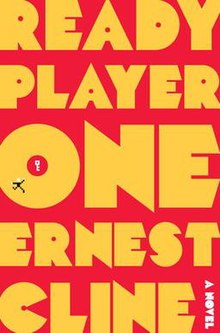
Ready Player One

Image result for ready player one book cover

Ready Player One by Ernest Cline

Summary:

In the year 2044, Wade Watts spends the majority of his time inside a massive virtual reality world called The Oasis, because, well, the real world sucks. Cities are falling apart, trailer parks are built up instead of out, and Wade has to live with his aunt and her abusive boyfriend. In The Oasis, Wade can be himself. When The Oasis creator, 80's pop culture obsessed James Halliday, dies, he leaves clues for three hidden keys and gates inside The Oasis. The avatar who solves the puzzles and finds the keys wins the ultimate prize: an egg that contains all of Halliday's fortune and complete control of The Oasis. When Wade finds the first key, his avatar, Parzival becomes instantly famous, and The Oasis changes from an escape for humanity to an unapologetic fight to the death.

Sci-Fi Characteristics:

Characters: The characters' avatars are used to show a different version of themselves. H specifically uses his avatar's gender to hide his true identity because of past discrimination. Wade uses his avatar to show the bravery he's too scared to show in reality.

Pace: The story, for the most part, is told through physical action of the characters' avatars, so the pace is fairly quick.

Tone: This story is emotional. It brings adventure and a sense of purpose to a desolate world. All five of the main characters deal with loss while trying to complete the Oasis challenge, often endangering their own lives in the real world. The danger is offset by the fun 80's pop culture references, the friendly banter between characters, and the romance between Wade and Art3mis.

Setting: Cline evokes an emotional response with his depiction of the dystopian reality and awe and wonder with the complexity of the Oasis, a technology that doesn't exist outside of Cline's mind...yet.

Read-a-likes:

Tuesday Mooney Talks to Ghosts by Kate Racculia
For the Win by Cory Doctorow
Press Start to Play by Ernest Cline
Girl in Landscape by Jonathan Lethem